Receiving a notification that your fingerprint submission has been rejected by the Federal Bureau of Investigation (FBI) or the Royal Canadian Mounted Police (RCMP) is a major setback. It is a costly issue that adds several weeks to your timeline and can jeopardize critical Express Entry ITAs or licensing deadlines. Both US and Canadian authorities utilize highly sensitive, high-resolution automated biometric scanning software that instantly flags and rejects imperfect cards.
Understanding why these rejections occur is the first step toward securing a flawless, first-time approval. This authoritative guide outlines the top 7 technical reasons fingerprint cards get rejected from India and how working with a certified professional service eliminates these risks entirely.
The High Cost of Fingerprint Rejections
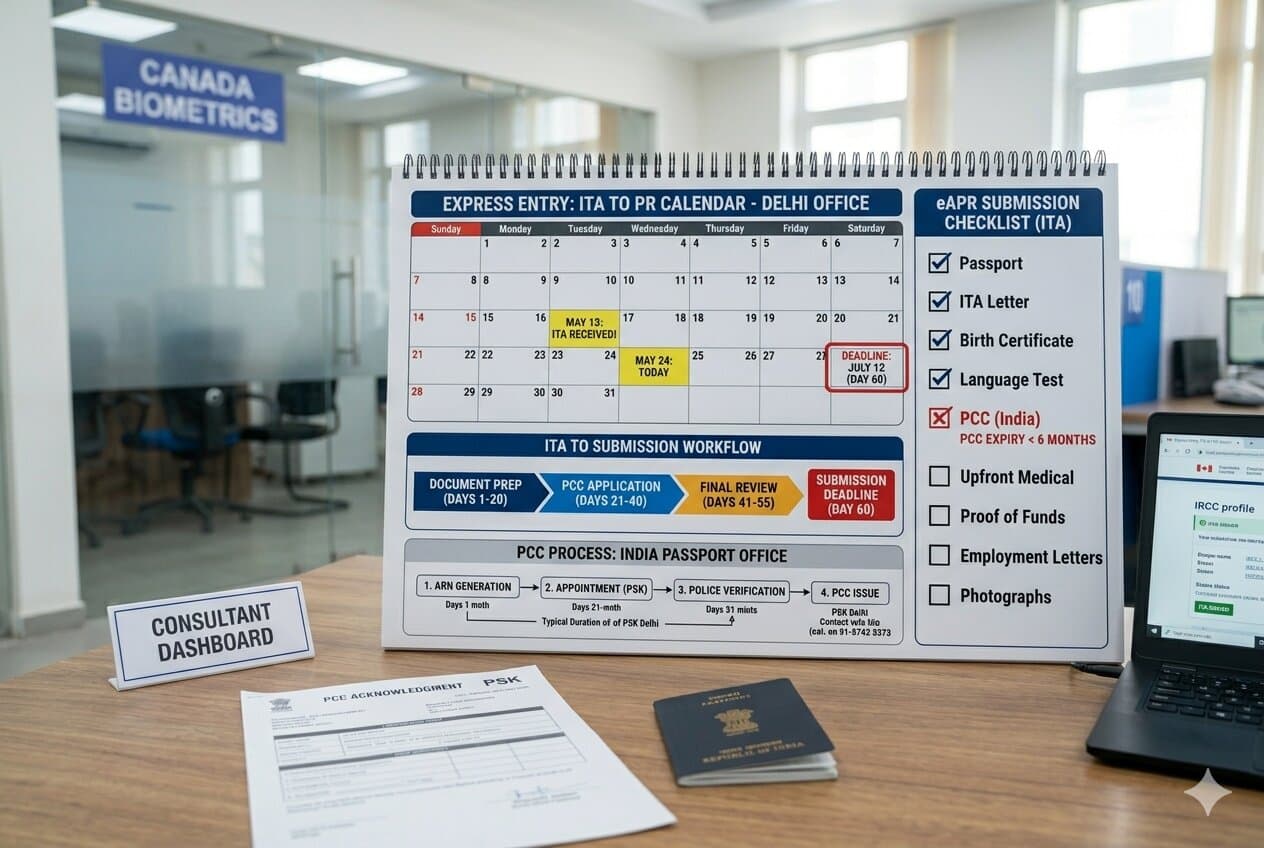
A biometric rejection is more than an inconvenience. It requires you to pay the government processing fees again ($18 USD for FBI / $22 CAD for RCMP), schedule and pay for a new fingerprinting session, and coordinate express international shipping again. More importantly, it adds a **4-to-6 week delay** to your timeline, which can lead to the cancellation of your Express Entry PR profile if you miss the strict 60-day upload window.
Need Fingerprinting Assistance?
Our certified mobile team captures professional prints securely. Avoid rejections with our expert service.
WhatsApp Us Now →Top 7 Rejection Reasons Explained
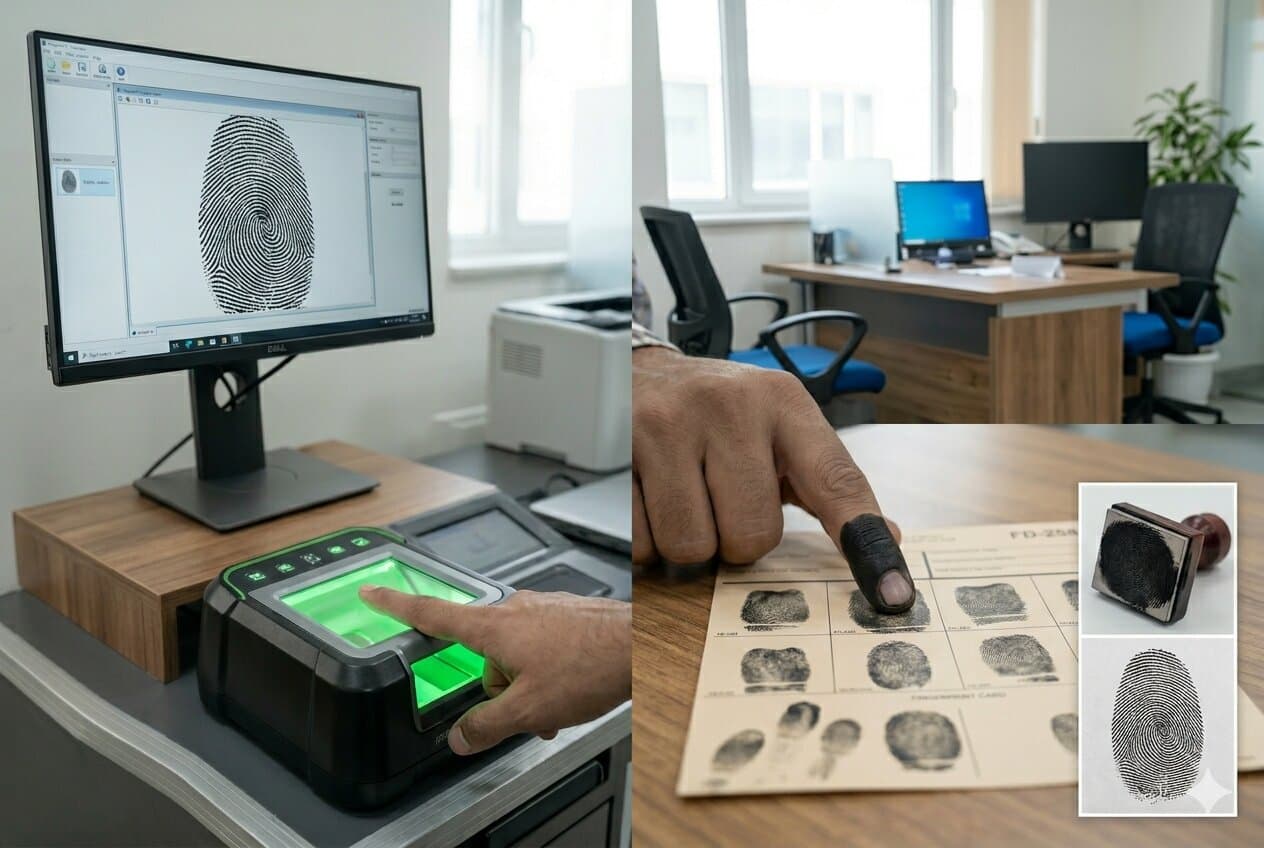
- 1. Smudging and Ridge Blur: Caused by applying too much ink, moving or sliding the finger during the rolling process, or rolling too quickly. The ridges must appear as sharp, distinct lines, not a dark, solid smudge.
- 2. Ink Bleeding and Voids: If the ink is unevenly applied or standard office ink pads are used, the ink will bleed into the paper or leave blank white voids where crucial ridge detail should be.
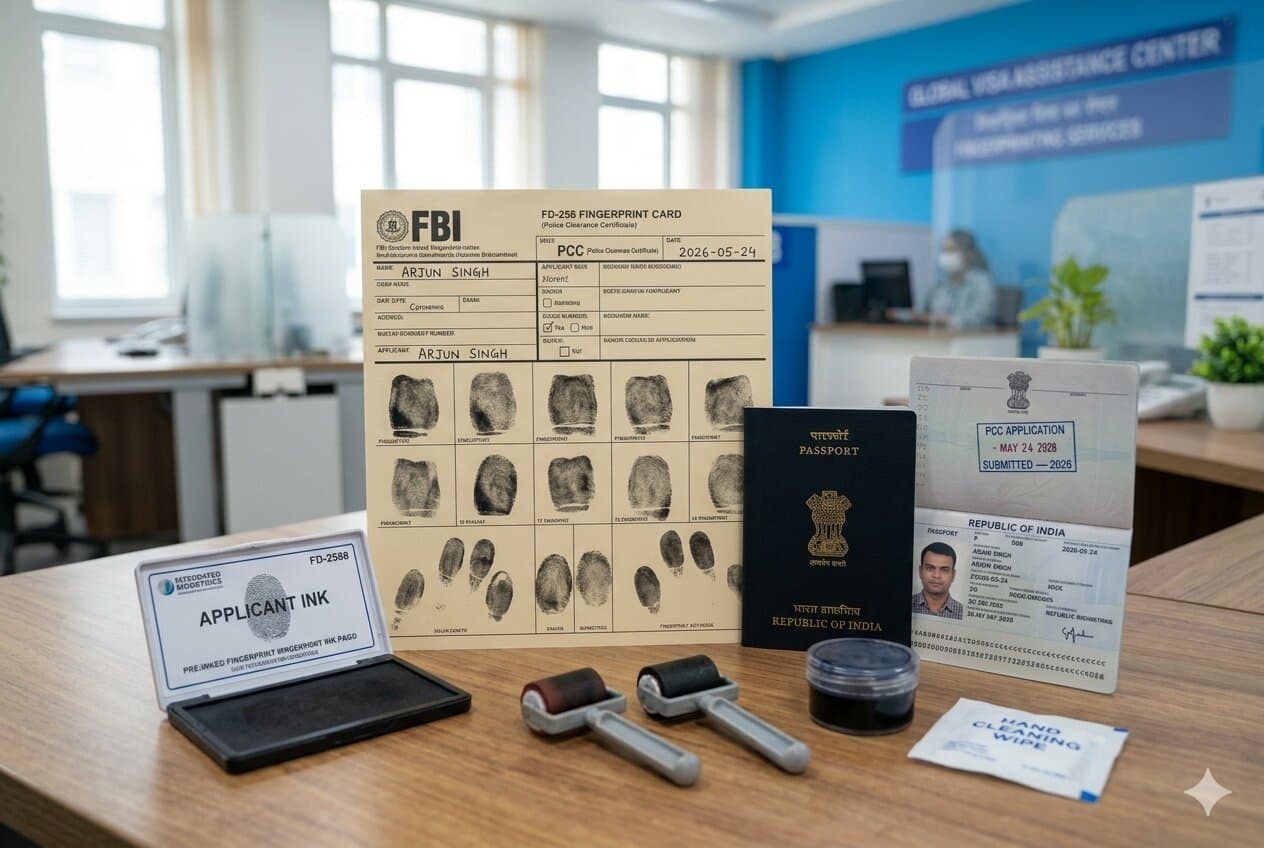
- 3. Non-Standard Fingerprint Cards: Submitting prints on standard office paper, photocopied layouts, or uncertified cardstock. The FBI only accepts the official standard blue-line FD-258 card, and the RCMP only accepts the C-216C card.
- 4. Incomplete Rolled Impressions: Failing to roll the finger nail-edge to nail-edge. The automated matching systems check the full width of the ridge patterns.
- 5. Typographical Biographical Errors: Discrepancies between the biographic data written on the card (full legal name, date of birth) and the applicant's official passport.
- 6. Missing Signatures: The card must be signed by both the applicant and the capturing technician. Leaving either block blank triggers immediate rejection.
- 7. Out-of-Sequence Prints: Placing the right hand's impressions in the left hand's boxes. The automated sequence validation checks the prints against the flat control blocks at the bottom and rejects any mismatch.
How Professional Fingerprinting Eliminates These Risks
At PCC Police Check, our forensic approach prevents these failures. We use only original FBI-certified card stock, use specialized forensic-grade high-contrast black ink that does not bleed or smudge, apply ridge hydration conditioning creams to dry skin, perform a mandatory magnification audit of every card, and ensure all biographical data is complete and accurate before your package is dispatched.
Need Fingerprinting Assistance?
Our certified mobile team captures professional prints securely. Avoid rejections with our expert service.
WhatsApp Us Now →